

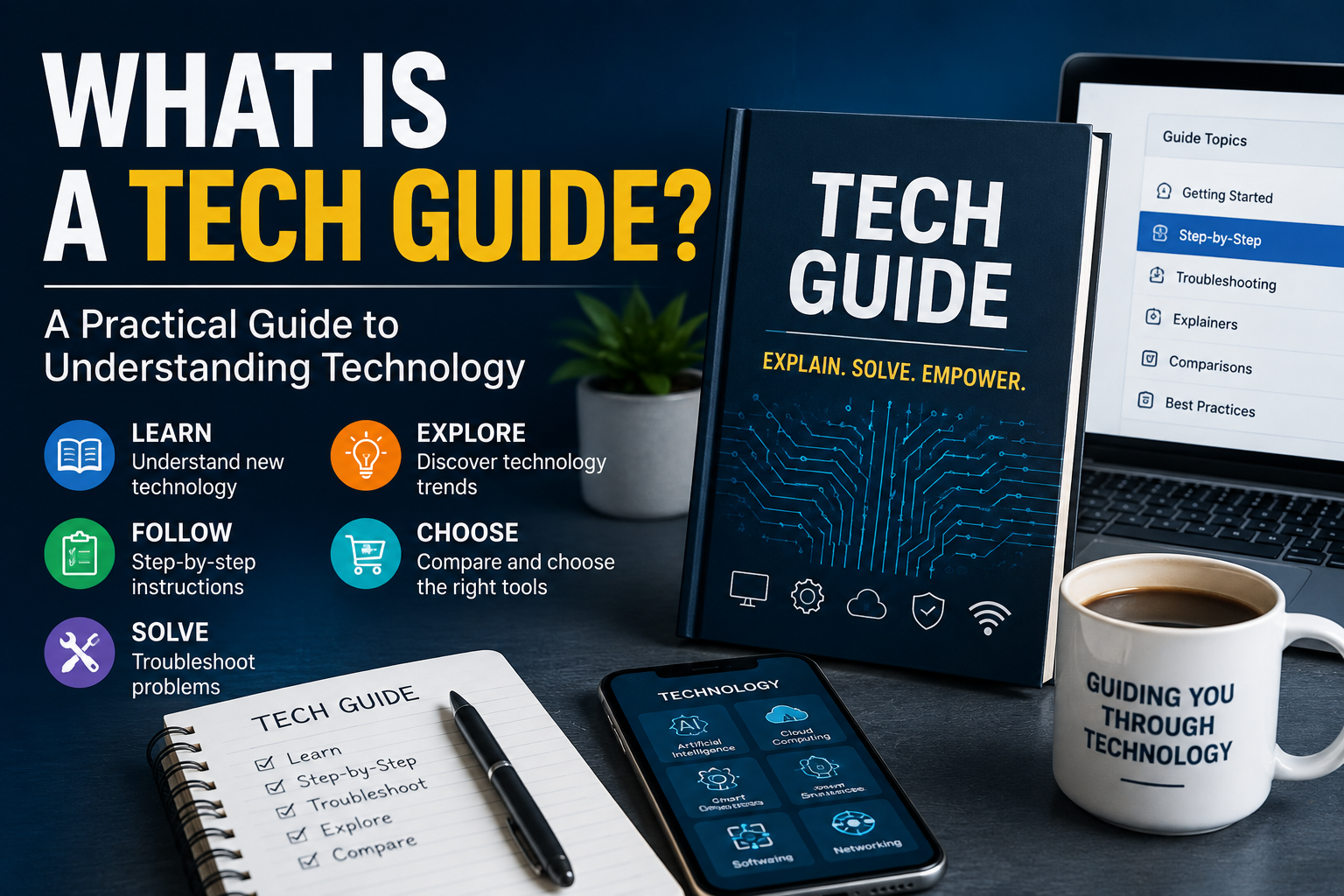
Technology is becoming part of almost every area of modern life. People use smartphones, computers, artificial intelligence, online platforms, smart devices, and digital services every day. Yet having access to technology does not always mean understanding how it works.
This is where a tech guide can be useful.
If you have searched for what is a tech guide roartechemental, you are essentially looking for a simple explanation of what a technology guide means, what it can cover, and how it can help people use digital tools more effectively.
A technology guide can explain a complicated concept, provide step-by-step instructions, solve a technical problem, or help someone understand a new technology trend. The format can vary, but the purpose is generally the same: making technology easier to understand and use.
What Is a Tech Guide?
A tech guide is an informational resource that helps people understand, use, troubleshoot, or evaluate technology.
A guide might explain how to set up a smartphone, use a software application, protect an online account, understand artificial intelligence, choose computer hardware, or solve a common technical problem.
Unlike highly technical documentation, many technology guides are written for ordinary users. They focus on practical explanations rather than assuming that the reader already has advanced technical knowledge.
This makes them useful for beginners as well as experienced users who need help with a specific technology.
Why Do People Need Technology Guides?
Technology changes quickly.
New software updates, devices, applications, online services, and digital technologies appear regularly. Even familiar products can introduce new features that users do not immediately understand.
A technology guide can reduce this learning curve.
Instead of searching through complicated documentation, a person can find a focused explanation that addresses a particular question or problem.
For example, someone who has purchased a new computer may need help transferring files. A business employee may need to learn a new productivity application. A student may want to understand how an AI-powered learning platform works.
Each situation can be addressed with a different type of tech guide.
Different Types of Tech Guides
Tech guides are not limited to one format. The type of guide usually depends on what the reader wants to accomplish.
Beginner Guides
Beginner guides introduce basic concepts without assuming advanced knowledge.
They might explain terms such as cloud storage, artificial intelligence, operating systems, cybersecurity, or machine learning.
The goal is to establish a basic understanding before moving into more complicated topics.
Step-by-Step Guides
A step-by-step guide explains how to complete a specific task.
For example, it might show users how to install software, configure a device, create an account, transfer files, or change a particular setting.
Good instructions should be presented in a logical sequence so that readers can follow them without unnecessary confusion.
Troubleshooting Guides
Sometimes technology simply does not work as expected.
Troubleshooting guides help users identify possible causes of technical problems and test different solutions.
A guide might explain what to do when a computer cannot connect to Wi-Fi, an application keeps crashing, a printer is not detected, or a device fails to sync.
The best troubleshooting resources usually start with simple solutions before moving to more advanced possibilities.
Technology Explainers
An explainer answers questions about how technology works.
Examples include:
- What is artificial intelligence?
- How does cloud computing work?
- What is machine learning?
- How does a search engine find information?
- What is a smart home?
- How does a VPN work?
These guides are especially useful when someone wants to understand a technology before deciding whether to use it.
Buying and Comparison Guides
Technology buying guides help users evaluate products or services.
They can compare specifications, features, performance, compatibility, pricing, and intended use.
A useful comparison should explain which option is appropriate for different needs instead of simply declaring one product the best.
How to Use a Tech Guide
Finding the right guide is only the first step. You also need to make sure that the instructions actually apply to your situation.
Start by identifying the exact problem you want to solve.
For example, instead of searching for “computer help,” search for the specific issue you are experiencing, such as “how to free storage on Windows” or “how to connect a laptop to Wi-Fi.”
Specific searches usually lead to more useful guides.
Next, check the date of the guide and the technology it covers. Software interfaces and device settings can change after updates, so an old guide may contain instructions that no longer match the current version.
When following instructions, complete one step at a time.
If something does not work, stop and review the previous step rather than continuing with instructions that depend on it.
How to Identify a Reliable Tech Guide
There is a huge amount of technology information online, but not every guide is equally reliable.
A trustworthy guide should provide clear information and avoid making unsupported claims.
Before following instructions, consider:
Who Published the Guide?
Look at the website or organization behind the content. Technical information from an established source or knowledgeable specialist may be more reliable than an anonymous page with no supporting information.
When Was It Updated?
Technology changes quickly. Check whether the guide is recent enough for the device, application, or technology you are using.
Does It Explain the Process Clearly?
A useful guide should tell you what to do rather than simply saying that something is possible.
Clear steps, examples, and explanations make instructions easier to follow.
Does It Explain Limitations?
A reliable guide should discuss potential problems and limitations instead of presenting technology as perfect.
This is particularly important for AI, cybersecurity, privacy, and other areas where incorrect information can create significant problems.
New Technology Trends and the Role of Tech Guides
One of the most useful purposes of technology guides is helping people understand new technology trends roartechemental.
Technology trends can be difficult to follow because companies often use technical terminology or marketing language when introducing new products and services.
A good guide can translate these developments into practical information.
For example, instead of simply stating that artificial intelligence is becoming more advanced, a useful guide can explain what the technology does, where it is being used, what problems it solves, and what limitations users should understand.
The same principle applies to robotics, wearable technology, cloud computing, automation, virtual reality, and other emerging fields.
Which Field of Technology Helps to Guide Behavior?
Technology can influence human behavior through reminders, recommendations, notifications, feedback, and personalized experiences.
If you are searching for which field of technology helps to guide behavior roartechemental, several related fields are worth understanding.
Human-computer interaction focuses on how people interact with digital systems. User experience design looks at how products are structured to make interactions easier. Artificial intelligence can personalize recommendations, while data analytics can identify patterns in user behavior.
Behavioral technology can combine some of these ideas to design systems that encourage particular actions.
For example, a fitness application may remind a user to exercise. A productivity application may send a deadline notification. An educational platform may encourage students to complete a lesson.
These systems can guide behavior, but responsible design is important. Technology should help people make informed choices rather than manipulate them.
Understanding Technology Through a Tech Infoguide
A good technology resource should do more than list features.
For example, the idea behind roartechemental tech infoguide by riproar can be understood as an information-focused approach to technology: helping readers understand what a technology is, how it works, where it can be useful, and what limitations they should consider.
This type of information is particularly valuable when a technology is new.
People often encounter new products through advertisements or social media before they understand what those products actually do.
An informative guide can provide context and help readers make decisions based on useful information rather than hype.
Tech Guides and Artificial Intelligence
Artificial intelligence has made technology guides even more valuable.
AI tools can now assist with writing, research, programming, translation, image generation, data analysis, and many other activities.
However, knowing that an AI tool exists is not enough.
Users also need to understand how to use it effectively, how to check its results, and when human judgment is necessary.
For example, an AI system may provide a confident answer that contains inaccurate information. A technology guide can explain why users should verify important results rather than assuming that every automated response is correct.
Understanding limitations is an important part of technology literacy.
How Tech Guides Help Beginners
Technology can feel intimidating when users encounter unfamiliar terms and settings.
A good beginner guide reduces that difficulty by explaining concepts in simple language.
Instead of assuming that readers already understand technical vocabulary, the guide can introduce terms gradually.
For example, someone learning about cloud storage may first need to understand that files can be stored on remote servers and accessed through the internet.
Once the basic idea is clear, more advanced concepts can be introduced.
This approach helps readers develop confidence rather than simply following instructions without understanding them.
How Tech Guides Help Students and Professionals
Technology guides are useful in education and professional environments.
Students can use them to learn new software, digital tools, research platforms, and emerging technologies.
Professionals can use them to learn workplace applications, improve workflows, understand new software features, and troubleshoot technical problems.
For people entering a new field, technology guides can also provide an introduction to unfamiliar terminology and concepts.
The goal is not just to solve one immediate problem. A well-written guide can help users develop broader digital skills.
Why Technology Guides Should Stay Practical
A technology guide does not need to explain every technical detail behind a product.
The amount of information should match the reader’s goal.
Someone trying to connect a device to Wi-Fi probably does not need a detailed explanation of wireless networking protocols. They need clear instructions that solve the problem.
Similarly, someone researching artificial intelligence may need a basic explanation before exploring advanced technical concepts.
Good guides therefore balance accuracy with accessibility.
The Future of Tech Guides
Technology guides will likely become more interactive as digital tools become more sophisticated.
Instead of relying only on written instructions, future guides may combine articles with videos, interactive demonstrations, personalized recommendations, and AI-assisted explanations.
A user could potentially describe a problem and receive instructions based on their particular device, software version, and level of technical knowledge.
However, the basic purpose will remain unchanged.
People will still need trustworthy information that helps them understand technology and make informed decisions.
Final Thoughts
So, what is a tech guide roartechemental?
At its core, a tech guide is a practical resource that helps people understand, use, troubleshoot, or evaluate technology.
It can be a beginner tutorial, troubleshooting article, technology explainer, buying guide, or detailed resource about an emerging technology.
As new technology trends roartechemental continue to develop, clear and accessible technology information becomes increasingly important. People need resources that explain not only what a technology can do, but also how it works, who can benefit from it, and what limitations it may have.
A good tech guide turns complicated information into practical knowledge. Whether you are a beginner learning a new device, a student exploring digital tools, or a professional adapting to new software, the right guide can make technology easier to understand and use.
