

Reviewed by Ric Guides Editorial Team
Nothing ruins an online match faster than high ping, sudden lag spikes, or random disconnects. Whether you’re playing competitive shooters, battle royales, racing games, or MMOs, your internet connection often has a bigger impact on performance than your gaming hardware.
That’s where Gaming Corner Zap-Internet comes in. While the name has appeared in discussions around gaming connectivity and network optimization, many players aren’t sure what it actually refers to or whether it can genuinely improve their online experience.
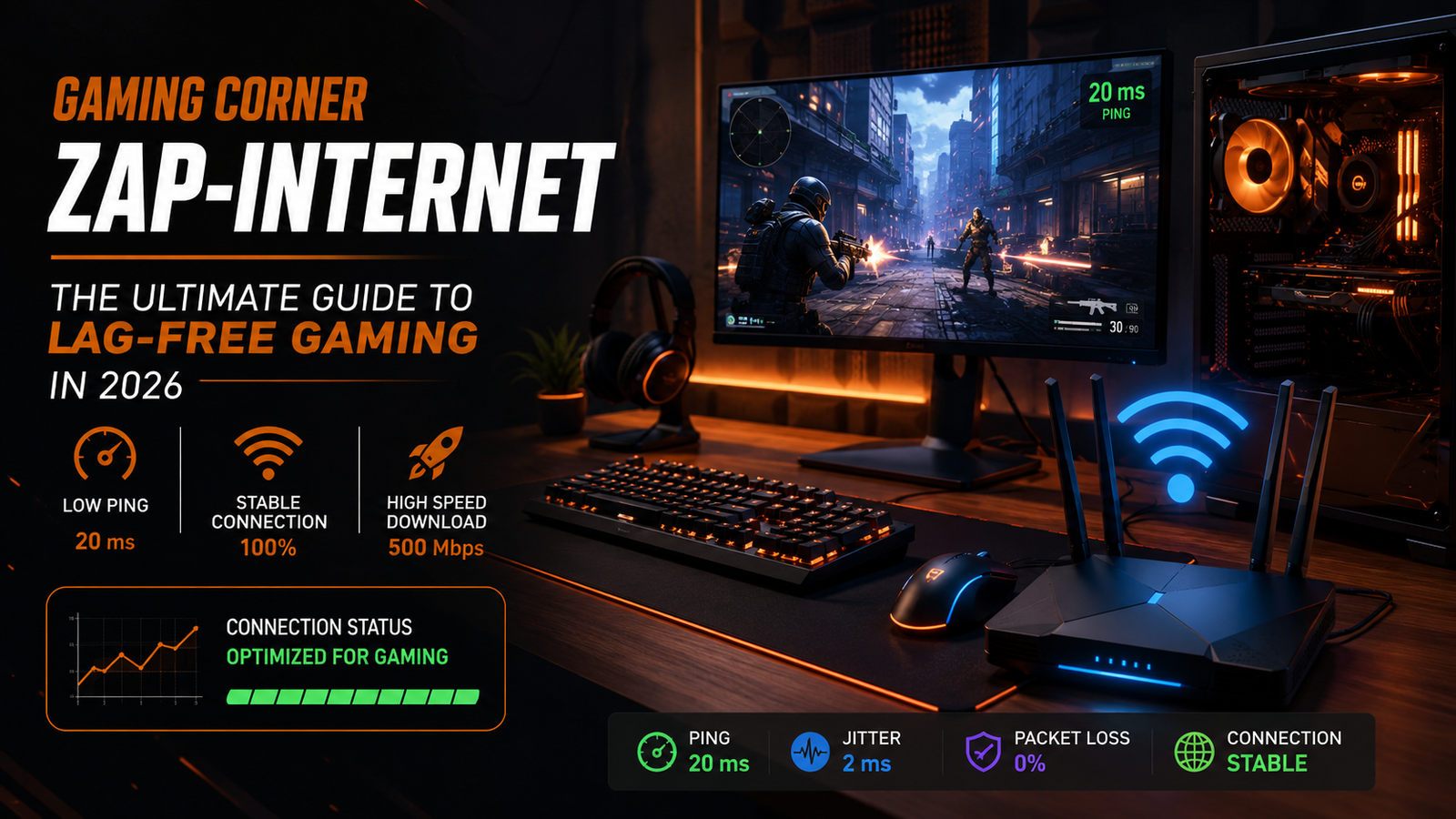
This guide explains what Gaming Corner Zap-Internet is, how it relates to gaming performance, which network problems it can help address, and the practical steps you can take to achieve a smoother, more responsive connection in 2026.
Rather than making unrealistic promises, we’ll focus on what genuinely affects online gaming, from latency and packet loss to router settings, wired connections, and modern networking technologies. By the end of this guide, you’ll know which optimizations are worth your time and which common “gaming internet” myths can safely be ignored.
What Is Gaming Corner Zap-Internet?
If you’ve come across the term Gaming Corner Zap-Internet, you might expect it to be a gaming service or a special internet technology. In reality, it’s better understood as a gaming-focused approach to improving your internet connection for smoother online play.
The idea is straightforward: create a network setup that minimizes lag, lowers ping, and keeps your connection stable during multiplayer matches. Instead of relying on a single tool, it combines practical optimizations such as using a wired connection, configuring your router correctly, reducing network congestion, and prioritizing gaming traffic.
For most gamers, these small adjustments can have a greater impact than simply upgrading to a faster internet plan. A stable connection with low latency is often more important than extremely high download speeds, especially in competitive games where every millisecond counts.
If you’re experiencing delayed inputs, rubber-banding, or random disconnects, the techniques associated with Gaming Corner Zap-Internet can help you identify the cause and improve your overall gaming experience.
In the sections below, we’ll explain what actually affects online gaming performance and show you the most effective ways to build a faster, more reliable gaming connection.
Why a Stable Internet Connection Matters for Gaming
When gamers think about better performance, they often focus on faster internet speeds. In reality, speed is only one part of the equation. For online gaming, a stable connection with low latency is usually far more important than having the fastest download plan available.
Here’s why:
- Low ping helps your actions reach the game server faster, making gameplay feel more responsive.
- Minimal packet loss ensures game data isn’t lost in transit, reducing stuttering and rubber-banding.
- Stable latency prevents sudden lag spikes that can interrupt matches.
- Consistent performance keeps your connection reliable during long gaming sessions.
For example, a 100 Mbps connection with a steady 20 ms ping will often provide a better gaming experience than a 1 Gbps connection suffering from unstable latency or frequent packet loss.
Common Signs Your Internet Is Hurting Your Gameplay
If you’ve noticed any of these issues, your network could be the cause:
- Delayed button presses or slow response times.
- Players or vehicles suddenly teleporting across the screen.
- Random disconnects from multiplayer matches.
- Voice chat cutting in and out.
- Lag spikes during busy hours.
The good news is that many of these problems can be improved without upgrading your internet plan. Optimizing your home network, reducing congestion, and using the right connection methods often deliver more noticeable results than paying for additional bandwidth.
In the next section, we’ll look at the most common reasons gamers experience lag and how to identify the real cause before trying to fix it.
What Causes Lag While Gaming?
Experiencing lag doesn’t always mean your internet is slow. In many cases, the issue comes from your home network, the game server, or even other devices sharing your connection. Identifying the cause is the first step toward fixing it.
1. High Ping
Ping measures how long it takes data to travel between your device and the game server. The higher the ping, the longer your actions take to register in-game.
General guideline:
- Under 30 ms: Excellent
- 30–60 ms: Very good
- 60–100 ms: Playable
- Above 100 ms: You may notice delays in competitive games
2. Packet Loss
Packet loss happens when some of your game data never reaches the server. This can lead to rubber-banding, freezing, delayed actions, or sudden disconnects during matches.
3. Wi-Fi Interference
Wireless networks are convenient, but they’re also affected by walls, distance, and interference from other devices. If your signal isn’t stable, your gaming performance may suffer even if your internet speed is high.
4. Network Congestion
If someone in your home is streaming 4K videos, downloading large files, or backing up data while you’re gaming, your connection may become congested. This can increase latency and create noticeable lag spikes.
5. Game Server Issues
Sometimes the problem isn’t on your end at all. Busy servers, scheduled maintenance, or regional outages can affect every player connected to the same game.
6. Outdated Networking Equipment
Older routers may struggle to handle multiple connected devices efficiently. If your router is several years old or hasn’t received firmware updates, it could be limiting your gaming performance.
The good news is that most of these issues can be reduced with a few practical changes. Next, we’ll cover the most effective ways to optimize your network for smoother, more reliable gaming in 2026.
How to Optimize Your Internet for Lag-Free Gaming
The best way to improve your gaming experience isn’t always buying a faster internet plan. In many cases, a few simple network adjustments can reduce lag, improve stability, and make online matches feel more responsive.
Use a Wired Ethernet Connection
If your gaming setup allows it, connect your PC or console directly to the router with an Ethernet cable. A wired connection offers lower latency, fewer interruptions, and more consistent performance than Wi-Fi, making it the preferred choice for competitive gaming.
Enable Quality of Service (QoS)
Many modern routers include a Quality of Service (QoS) feature that lets you prioritize gaming traffic over downloads, video streaming, and other network activity. This helps maintain stable performance, especially in homes where multiple devices are connected at the same time.
Reduce Background Network Activity
Before starting an online game, pause unnecessary downloads, cloud backups, software updates, and video streaming on other devices. Freeing up bandwidth can help prevent sudden lag spikes during gameplay.
Improve Your Wi-Fi Signal
If Ethernet isn’t an option, try to get the strongest wireless connection possible by:
- Moving closer to the router.
- Using the 5 GHz or 6 GHz Wi-Fi band if available.
- Keeping the router in an open, central location.
- Reducing interference from walls and other electronic devices.
Keep Your Router Updated
Router manufacturers regularly release firmware updates that improve security, stability, and performance. Installing the latest firmware can resolve connection issues and ensure your network runs efficiently.
Choose the Nearest Game Server
Most multiplayer games let you connect to different regions. Selecting the server closest to your location usually results in lower ping and a smoother online experience.
Restart Your Network Occasionally
A quick restart of your modem and router can clear temporary network issues and refresh your connection. It’s a simple step that often resolves unexplained lag or connectivity problems.
These optimizations won’t eliminate every networking issue, but together they can make a noticeable difference in reducing latency and improving overall gameplay. Up next, we’ll clear up a common misconception: does faster internet really mean better gaming?
Does Faster Internet Always Mean Better Gaming?
Not necessarily. One of the biggest misconceptions among gamers is that upgrading to a faster internet plan will automatically eliminate lag. While higher speeds are useful for downloading games and streaming content, they don’t always improve online gameplay.
What matters most is the quality of your connection.
For example, a stable 100 Mbps connection with low latency will usually deliver a smoother gaming experience than a 1 Gbps connection that suffers from high ping or frequent packet loss.
Here’s how different internet factors affect gaming:
| Factor | Why It Matters |
|---|---|
| Ping (Latency) | Determines how quickly your actions reach the game server. Lower is better. |
| Connection Stability | Prevents lag spikes, freezes, and unexpected disconnects. |
| Packet Loss | Ensures game data is delivered correctly without interruptions. |
| Download Speed | Mainly affects game downloads, updates, and streaming. |
| Upload Speed | Important for voice chat, live streaming, and sending game data. |
For most online games, you don’t need an ultra-fast internet package. A reliable broadband connection with consistent latency is more than enough for smooth gameplay.
If multiple people in your household are streaming videos, attending online meetings, or downloading large files while you’re gaming, then upgrading your plan may help. Otherwise, optimizing your home network often provides a bigger improvement than simply paying for more bandwidth.
The key takeaway is simple: focus on stability first, speed second. A well-configured network can outperform a much faster connection that’s unstable.
Next, let’s answer one final question many gamers have: Is Gaming Corner Zap-Internet actually worth following in 2026?
Is Gaming Corner Zap-Internet Worth It in 2026?
If you’re expecting Gaming Corner Zap-Internet to be a one-click solution that instantly removes lag, you’ll likely be disappointed. There isn’t a single service or technology that can guarantee a perfect online connection in every game.
However, if you view it as a collection of proven networking practices, the concept is absolutely worth following.
Simple changes like switching to Ethernet, enabling QoS, reducing network congestion, and choosing the nearest game server can noticeably improve your gaming experience without spending money on expensive hardware or a higher-speed internet plan.
That said, it’s important to keep realistic expectations. Some issues are outside your control, including:
- Game server outages or maintenance
- ISP routing problems
- Regional internet disruptions
- Hardware limitations on older devices
In these situations, even a well-optimized home network can’t completely eliminate lag. The goal is to reduce the problems you can control and create the most stable connection possible.
For casual and competitive gamers alike, spending a few minutes optimizing your network is often more valuable than chasing higher download speeds. Better stability, lower latency, and fewer interruptions can make every gaming session more enjoyable.
Final Verdict
Gaming Corner Zap-Internet isn’t a standalone product or a guaranteed fix for every connectivity problem. Instead, it represents a practical approach to improving online gaming through smarter network optimization.
If you’re dealing with high ping, lag spikes, or unstable multiplayer sessions, start with the basics: use a wired connection when possible, optimize your router settings, keep your equipment updated, and avoid unnecessary network congestion during gameplay.
These changes won’t solve server-side issues, but they can significantly improve the parts of your connection that are under your control. In 2026, that’s still the most effective strategy for achieving smoother, more responsive online gaming—regardless of whether you play on PC, PlayStation, Xbox, Nintendo Switch, or mobile devices.
