

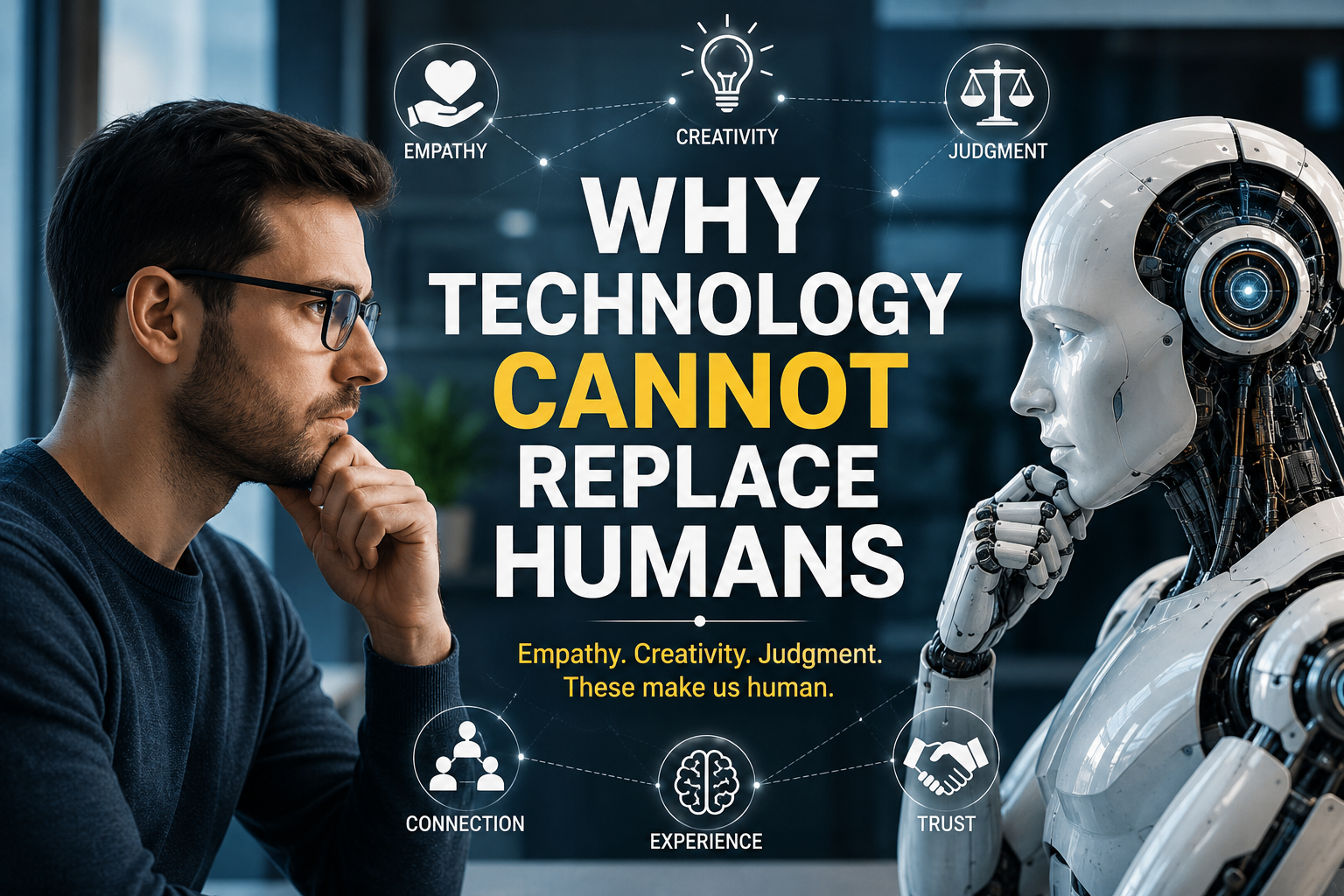
Technology is changing almost every part of modern life. Artificial intelligence, automation, smartphones, cloud computing, and other digital tools have made it possible to complete many tasks faster and more efficiently than ever before. At the same time, these developments have raised an important question: why technology cannot replace humans roartechemental?
The answer becomes clearer when we look beyond automation. Technology can process information, recognize patterns, automate repetitive tasks, and assist people with complicated work. However, humans bring empathy, creativity, personal experience, emotional intelligence, moral judgment, and genuine relationships to situations that machines cannot fully understand.
At RIC Guides, we explore technology in a simple and practical way, helping readers understand how new digital tools work and where they can be useful.
The Growth of New Technology
The development of new technology roartechemental has changed the way people communicate, work, study, and access information.
Smartphones allow people to communicate from almost anywhere. Cloud services make files accessible across multiple devices. Automation can handle repetitive business processes, while artificial intelligence can analyze information and assist with tasks such as writing, programming, research, and data analysis.
These technologies can save time and increase productivity.
However, technological capability should not be confused with human replacement. A system may be able to perform one particular task extremely well while still being unable to understand the broader circumstances surrounding that task.
This distinction is important when discussing the future of technology.
Why Technology Cannot Replace Humans
The question of why technology cannot replace humans roartechemental is ultimately about the differences between machines and people.
Technology is designed to perform functions. Humans can understand situations, interpret emotions, adapt to unexpected circumstances, and make decisions based on values and experience.
Consider a simple conversation. Software can recognize words and generate a response, but a human conversation involves much more than exchanging sentences. People understand facial expressions, tone, pauses, body language, personal history, and emotional context.
These qualities make human interaction difficult to reduce to an automated process.
1. Humans Understand Empathy
Empathy is one of the strongest examples of a human quality that technology cannot fully reproduce.
A person can recognize that a friend is upset even when they say everything is fine. A teacher can notice that a student is struggling without being directly told. A manager can understand when an employee needs support rather than criticism.
Technology can analyze signals associated with emotions, but analyzing an emotional signal is different from experiencing and understanding another person’s situation.
Human empathy develops through relationships and lived experiences.
Technology can assist professionals who work with people, but the emotional relationship between people remains important.
2. Human Creativity Has Personal Meaning
Modern technology can generate text, images, music, designs, and other forms of content. Artificial intelligence has made these capabilities particularly visible.
Yet human creativity is not simply the ability to produce something new.
People create from their memories, experiences, emotions, cultures, observations, and personal beliefs. A writer may develop a story because of something that happened in their life. An artist may create a painting based on a personal experience. An entrepreneur may develop a product after experiencing a problem themselves.
Technology can help these people explore ideas and produce work more efficiently.
But the personal meaning behind the idea comes from the human creator.
3. Human Judgment Provides Context
Technology can process enormous amounts of information, but real-world decisions often require context.
Two situations may look similar when viewed as data but require completely different decisions because of the people involved or the circumstances surrounding them.
Humans can consider these details.
For example, a teacher deciding how to help a student may consider the student’s previous performance, confidence, personal circumstances, and communication style. A simple automated recommendation may not capture all of those factors.
Technology can provide useful information, but human judgment can determine how that information should be interpreted.
4. Human Relationships Cannot Be Automated
Technology has made communication easier.
People can send instant messages, make video calls, share photographs, and communicate with communities around the world. These tools are especially valuable when physical distance separates people.
However, digital communication does not completely replace human connection.
A face-to-face conversation includes facial expressions, body language, tone, physical presence, and shared experiences. Relationships also depend on trust, understanding, and repeated interaction.
Technology can help people maintain relationships, but people create those relationships.
This is one of the most important reasons technology should be viewed as a tool for connection rather than a complete replacement for it.
5. Humans Adapt to Unexpected Problems
Technology generally performs best when it has a defined process or objective.
Real life is rarely that predictable.
Unexpected problems can occur in workplaces, classrooms, hospitals, businesses, and everyday situations. People may suddenly need to change plans, consider new information, or create a solution that was never anticipated.
Humans can improvise.
They can ask different questions, reconsider their assumptions, combine unrelated ideas, and make decisions when there is no predefined answer.
This adaptability remains extremely valuable.
6. Technology Can Make Errors
Another important reason humans remain necessary is that technology is not automatically perfect.
Software can contain bugs. Automated systems can rely on incomplete information. Artificial intelligence can generate incorrect responses. Algorithms can also produce unexpected results when they encounter situations that differ from the information used during development.
Human oversight can help identify these problems.
A person can question an unusual result, compare it with real-world evidence, and determine whether further investigation is needed.
This is especially important when technology is being used in situations involving safety, finance, education, healthcare, or other areas where mistakes can have serious consequences.
New Technology Trends and Human Skills
Many new technology trends roartechemental focus on automation, artificial intelligence, robotics, connected devices, and increasingly intelligent software.
These trends are changing the skills that people need.
Instead of competing with machines on repetitive tasks, people can focus on skills such as communication, creativity, critical thinking, leadership, problem-solving, and emotional intelligence.
This does not mean technical knowledge is becoming less important.
People need to understand technology well enough to use it responsibly, evaluate its results, and recognize its limitations.
The future may therefore require a combination of technological knowledge and strong human skills.
Can Artificial Intelligence Replace Humans?
Artificial intelligence has increased concerns about human replacement because modern AI systems can perform tasks that previously required specialized human skills.
AI can summarize documents, generate content, translate languages, assist with programming, analyze information, and automate parts of professional workflows.
Some tasks will undoubtedly become automated.
However, automating a task is not the same as replacing an entire person or profession.
Most jobs involve multiple responsibilities. A system may automate data entry while people still need to communicate with customers. AI may help analyze information while a professional makes the final decision. Software may create a draft while a human reviews and improves it.
This means the relationship between humans and AI is often more complicated than simple replacement.
Technology Works Best When It Supports People
Instead of asking whether technology will replace humans, it can be more useful to ask how technology can help people accomplish more.
A calculator helps people perform calculations. Navigation applications help drivers find routes. Digital learning platforms give students access to educational materials. AI tools can help professionals organize and analyze information.
In each case, technology extends human capabilities.
People remain responsible for deciding how and when those tools should be used.
This approach allows technology to handle repetitive or information-heavy work while humans focus on activities that require judgment, creativity, communication, and responsibility.
Human Experience Still Matters
People develop knowledge through experience.
A teacher learns how students respond to different explanations. A doctor develops professional judgment through years of working with patients. An engineer learns how designs behave under real-world conditions.
Technology can provide information and identify patterns, but experience helps people understand how those patterns apply to a specific situation.
This is especially important when circumstances are unusual or incomplete information is available.
Human experience and technology can therefore complement each other.
How to Use Technology Without Losing Human Connection
Technology becomes most useful when people remain intentional about how they use it.
Messaging applications can help people stay connected, but they should not necessarily replace every face-to-face conversation. AI can assist with research, but important information should still be reviewed. Online learning can provide valuable resources, while interaction with teachers and classmates remains important.
A simple principle is useful:
Use technology to support human activity, not to eliminate meaningful human interaction.
This approach allows people to benefit from digital tools without becoming completely dependent on them.
What the Future of Technology May Look Like
The future will likely contain even more advanced technology.
Artificial intelligence may become better at understanding language and images. Robotics may become more capable of physical tasks. Connected devices may automate more aspects of daily life. Businesses may use increasingly sophisticated software to analyze information and improve operations.
These developments will certainly change the way people work.
But change does not necessarily mean replacement.
New technologies can remove some tasks while creating new responsibilities and opportunities. People may spend less time on repetitive activities and more time on planning, creativity, communication, decision-making, and innovation.
The most successful approach may be collaboration rather than competition.
Final Thoughts
The discussion around why technology cannot replace humans roartechemental should not be about rejecting technological progress.
Technology has enormous value. It can automate repetitive work, process information quickly, connect people across distances, and provide tools that improve productivity.
But human beings contribute qualities that technology cannot fully reproduce: empathy, creativity, experience, adaptability, emotional understanding, ethical judgment, and meaningful relationships.
As new technology roartechemental and future innovations continue to develop, the goal should be to use them intelligently.
The future does not have to be humans versus machines. Technology can handle the tasks it performs best while people continue to provide the judgment, creativity, compassion, and purpose that make technology useful in the first place.
